
Why Solo Piano Recordings Require a Dedicated Piano Audio to MIDI Engine
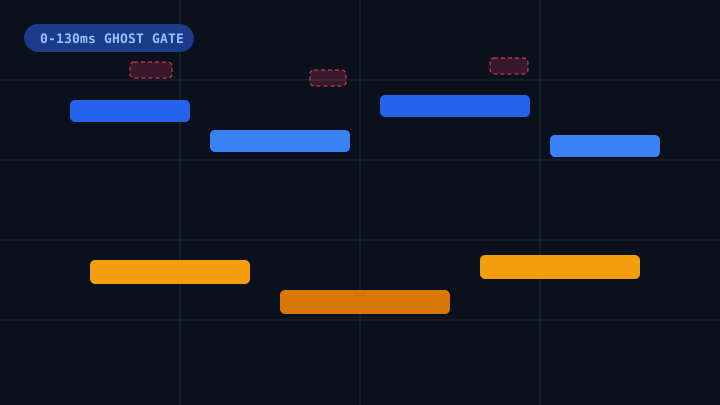
Transcribing an acoustic grand piano, upright piano, or stage electric piano recording is one of the toughest problems in polyphonic music analysis. When a pianist depresses the damper pedal while voicing a two-handed chord, sympathetic string vibrations and cabinet resonances overlap across all seven octaves of the 88-key keyboard (A0 to C8). A general-purpose pitch tracker treats those decaying pedal tails and upper harmonic partials as fresh note onsets, producing an unreadable wall of overlapping bars. Our dedicated piano audio to midi workbench solves this by combining hammer-transient onset detection with a 0-130ms sustain-pedal ghost-note gate.
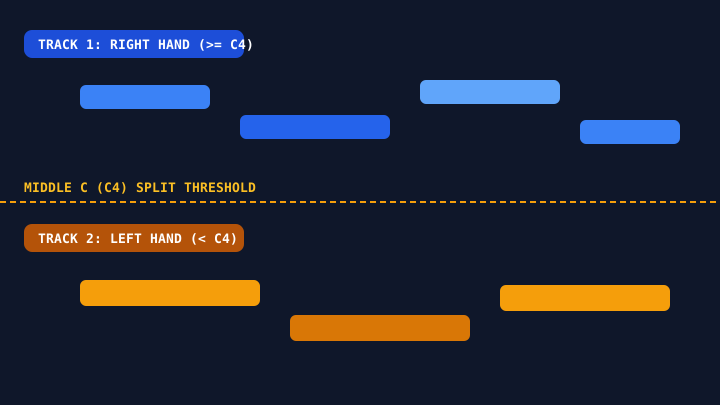
Equally important for arrangers, piano students, and composers is two-handed staff separation. If a transcription tool exports a flat Format 0 file where left-hand Alberti bass figures and right-hand melody lines sit on the same channel, importing that file into MuseScore, Sibelius, Finale, or Logic Pro produces a single illegible staff. Our piano audio to midi converter builds a dual-track SMF Format 1 container that splits pitches cleanly at Middle C (C4, MIDI note 60)—and lets you solo right-hand (>= C4) or left-hand (< C4) registers independently before download.
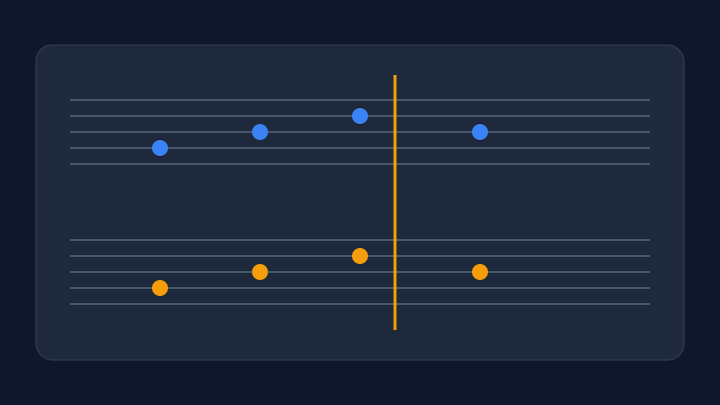
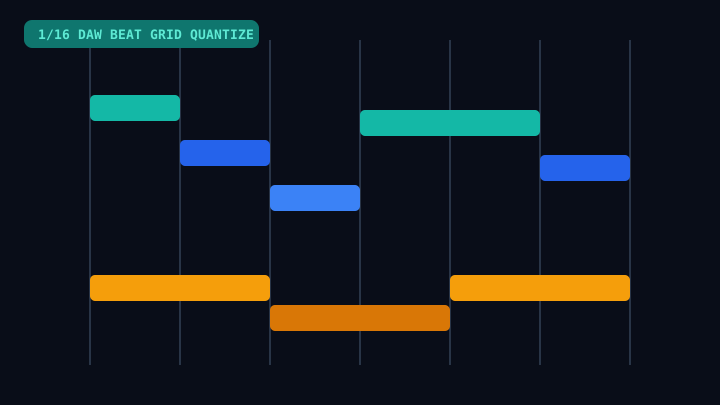
Whether you are transcribing a classical nocturne, jazz solo improvisation, worship accompaniment stem, or voice-memo keyboard sketch, our studio decodes your MP3, WAV, or FLAC file locally in your browser in under 3 seconds. Solo acoustic or digital piano recordings deliver the highest accuracy; if your track has heavy hall reverb, raising the pedal gate to 75ms-90ms keeps measure boundaries sharp. Audition the 88-key Piano Roll, verify voicings on the Grand Staff Treble and Bass Clef view, fine-tune the 1/16 or 1/8T beat grid, and download a 15-second .MID sample for 0 credits before spending 1 credit on the full-length piano audio to midi export.
Sustain-Pedal & Sympathetic String Gate
A grand or upright piano produces rich 2nd and 3rd harmonic partials plus damper-pedal resonance. Our piano audio to midi filter strips sub-65ms overtone spikes without clipping fast 16th-note runs.
Automatic C4 Right & Left Hand Split
Every piano audio to midi session splits notes cleanly around Middle C (C4 / 261.6Hz), exporting Track 1 for right-hand treble melody and Track 2 for left-hand bass chords in SMF Format 1.
Hammer-Velocity Dynamic Curve Preservation
Our engine maps peak hammer attack amplitude to MIDI velocity (1-127), preserving soft pianissimo passages and accented fortissimo chords for Kontakt, Keyscape, and Pianoteq VSTs.
Local Browser Decoding & Free 15s Sample
Decode your solo piano MP3, 24-bit WAV, or FLAC recording locally in your browser in under 3 seconds, with 100% free 15-second .MID sample downloads.